Cambodia: Ancient Temples, Khmer Culture & the Magic of Angkor
Your Guide to the Land of the Khmer
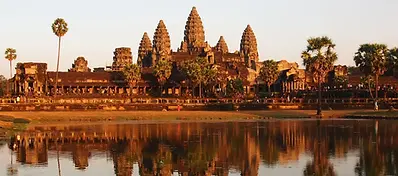
Cambodia felt ancient and alive all at once. We based ourselves in Siem Reap, diving into the incredible Angkor temple complex, from the epic spires of Angkor Wat to the iconic stone faces of Bayon, and the overgrown wonder of Ta Prohm. We wandered through the South Gate of Angkor Thom (Tonlé Om Gate), climbed the ruins of Phimeanakas, and stood on the Terrace of the Elephants, retracing the footsteps of kings. Evenings brought us to the chaos and color of Pub Street, and days were filled with Khmer food, history, and heat. This guide pulls it all together—temple routes, entry tips, cultural insights, and what to expect from one of Southeast Asia’s most awe-inspiring experiences.
Quick Navigation
Share This Guide
Discover
Our Top Recommended Places
Our Interactive Map & Guide to Cambodia
Check out all the places we visited in Cambodia with our interactive map from Wanderlog. Tap any of the numbers for more information, including directions, our blog posts, links to reviews, and much more.
Wanderlog is a free travel planning app that allows users to create trip itineraries, organize flights, hotel, and car reservations, view places to visit on a map, and collaborate with friends. It saves time and is super easy to use!
If you see nothing here, please refresh the page
Use our interactive map to easily locate the top hotels here, sourced from a variety of reputable platforms such as Booking.com, Vrbo, Expedia, Get Your Guide, and Hotels.com.
Powered by Stay22, our map allows you to zoom easily, providing a comprehensive view and so you can identify the most convenient hotel options based on your current location or desired destination.
Find the Best Deals on Top Hotels in Cambodia
Top Activities - Book in Advance
Interesting Facts
Here are 15 interesting facts about Cambodia. Some may just surprise you!
1. Angkor Wat is the Largest Religious Monument in the World: This stunning temple complex near Siem Reap covers over 400 acres and is a UNESCO World Heritage Site.
2. Cambodia was the Heart of the Khmer Empire: From the 9th to the 15th century, the Khmer Empire ruled much of Southeast Asia, leaving a legacy of impressive architecture and culture.
3. The Tonle Sap Lake is Southeast Asia’s Largest Freshwater Lake: It dramatically expands and contracts with the seasons, supporting a rich ecosystem and millions of livelihoods.
4. The Khmer Rouge Regime Severely Impacted Cambodia: Between 1975 and 1979, the regime caused devastating loss of life and cultural heritage, a period still deeply felt today.
5. Cambodian New Year is a Major Celebration: Known as Chaul Chnam Thmey, it marks the traditional solar new year with festivals, dancing, and water fights.
6. The Country Has One of the Youngest Populations in the World: Over 60% of Cambodians are under 30, contributing to a dynamic and growing society.
7. Khmer is the Official Language and one of the Oldest in Southeast Asia: It has its own script and a rich literary tradition dating back centuries.
8. Cambodia’s Cuisine Features the National Dish Amok: A fragrant curry steamed in banana leaves, amok is a must-try for visitors.
9. Phnom Penh is known as the “Pearl of Asia.” The capital city offers a mix of French colonial architecture, bustling markets, and riverside views.
10. The Mekong River Flows Through Cambodia: It’s vital for agriculture, transport, and culture across the country.
11. Cambodia has a Rich Tradition of Classical Dance: The Royal Ballet of Cambodia preserves ancient dance forms and costumes dating back to the Angkorian era.
12. The Country Uses the Riel and US Dollar: Both currencies are accepted widely, with the US dollar used for many large transactions.
13. Cambodia’s Temples Are Surrounded by Wildlife: In and around Angkor, monkeys, birds, and other wildlife coexist with the ruins.
14. Silk Weaving Is a Traditional Craft: Cambodian silk is known for its quality and vibrant patterns, often made by hand in rural communities.
15. The Country Is Recovering Rapidly: After decades of hardship, Cambodia is growing quickly, with tourism and textiles leading the way.
Latest Posts


Preah Ko Temple Guide: Exploring the Sacred Roots of Angkor, Cambodia


Terrace of the Elephants at Angkor Thom: Cambodia’s Grand Royal Platform


Phimeanakas: The Celestial Temple of Angkor in Siem Reap, Cambodia


Mysteries & Marvels: The Enigmatic Tonle Om Gate (Angkor Thom South Gate), Cambodia


Bayon Temple: Towers of Smiles in Angkor, Cambodia


Angkor Wat, Cambodia: The Ultimate Temple Guide for First-Time Visitors
Travel Essentials
Travel Information for Cambodia: Practical Tips & Essentials
Internet, SIMs, Dial Code & Plug Sockets
Cambodia offers surprisingly strong mobile and internet connectivity, especially in cities like Phnom Penh and Siem Reap.
While rural areas can be patchy, major tourist destinations have good coverage, affordable SIM cards, and plenty of places offering Wi-Fi.
Having local data is useful for maps, translations, transport, and mobile payments, so it’s worth getting connected as soon as you arrive.
Save 50% on NordPass Premium
NordPass is more than an intuitive password manager – it helps both businesses and individuals easily secure and monitor access to their online accounts and sensitive information.
Get 73% off NordVPN's
2-year plan
The most advanced VPN with additional features. One of the fastest VPNs globally. Secures up to 10 devices using a single account. Helps you avoid phishing, scams, and malware threats.
Internet Service Providers (ISPs) in Cambodia
Wi-Fi is common in hotels, cafes, and restaurants in urban areas, though speeds can vary depending on the provider and location. Fiber-optic connections are improving, particularly in Phnom Penh.
Top Cambodian ISPs include:
● EZECOM: Popular for home and business use, offering fiber-optic packages.
● SINET: Known for business-grade internet, good in Phnom Penh and Siem Reap.
💡 Tip: If staying longer or working remotely, consider accommodations with confirmed fiber-optic Wi-Fi or use a local SIM for hotspot tethering.
Mobile Phone Options for Tourists
Prepaid SIM cards are easy to buy at airports, convenience stores, or official vendor kiosks. Data plans are affordable, and coverage is good in populated areas.
Recommended providers:
● Cellcard: Government-owned, excellent coverage, and tourist-friendly plans.
● Smart Axiata: Fast data speeds, especially in urban zones.
● Metfone: Strong rural reach, often used by locals.
Most providers offer daily, weekly, or monthly data plans. For tourists, $5–10 USD typically covers a week of heavy data use.
💡 eSIMs are a convenient option for newer phones. They’re ideal for short stays and can be activated online before or upon arrival. Be sure your phone is eSIM-compatible.
If you have an unlocked phone, international eSIM providers are an easy way to stay connected:
● GigSky – Quick setup, reliable data plans, and good for frequent travelers.
● Saily – Flexible and budget-friendly eSIM options, great for short-term trips.
● Simbye – Designed with travelers in mind, offering instant eSIM activation and fair pricing.
Cambodia Dial Code
To call Cambodia from abroad, use the following format:
● International Dialing Format: +855 followed by the local number.
Example: +855 23 123 456 (23 = Phnom Penh area code)
● Cambodia Exit Code (to call out from Cambodia): 00
Example: To call the US, dial 00 1 212 555 7890
● Local Calls Within Cambodia: Use the full mobile number (usually 8 or 9 digits). For landlines, include the city code.
💡 Tip: Cambodian mobile numbers often start with 012, 015, 016, 092, or 093. Double-check the first digits when saving or dialing local contacts.
Plug Sockets in Cambodia
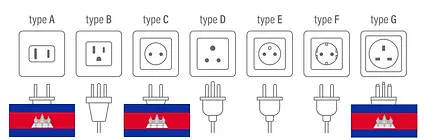
Cambodia uses Type A, C, and G plugs. Most outlets accept Type A (flat) and Type C (round two-pin), but some places have British-style Type G.
● Voltage: 230 V
● Frequency: 50 Hz
⚠️ Voltage Safety Tip:
Check your device voltage if arriving from a 110V country (e.g., the U.S. or Japan). Many modern devices are dual-voltage, but sensitive items may need a converter.
🔌 Adapters Needed:
Bring a universal adapter that supports multiple plug types, especially if your accommodation is outside the main cities.
.jpg)

Cuisine in Cambodia
Cambodian cuisine, or Khmer food, is often overshadowed by its Southeast Asian neighbors, but it’s one of the region’s hidden gems.
It’s aromatic and subtle, with less spice than Thai food and more herbaceous depth.
Rice is the foundation of most meals, and fish plays a central role thanks to the country's vast river network and proximity to the Mekong and Tonlé Sap.
Staples
Rice is served with nearly every meal in Cambodia. It’s often accompanied by grilled meats, fish, and soups. Noodles, made from rice or egg, are also a daily favorite.
Popular staples include:
● Bai sach chrouk: Grilled pork and rice, usually served at breakfast with pickled vegetables and broth.
● Nom banh chok: Khmer rice noodle soup with green curry gravy, herbs, and banana blossom.
● Lort cha: Stir-fried short rice noodles with beef, bean sprouts, and a fried egg.
● Bai cha: Cambodian-style fried rice often made with Chinese sausage and egg.
● Mee cha: Stir-fried egg noodles with vegetables, soy sauce, and optional meat or seafood.
💡 Tip: Morning markets are great places to try authentic Khmer breakfast dishes — they’re fresh, fast, and cheap.
Meat Dishes
Khmer meat dishes focus on grilled, fried, or stewed preparations, often marinated with lemongrass, garlic, turmeric, and galangal.
Key dishes include:
● Lok lak: Stir-fried beef cubes served with a lime and pepper dipping sauce, rice, and egg.
● Samlor korko: A hearty stew with pork or fish, green papaya, eggplant, and fermented fish paste (prahok).
● Cha kreung sach ko: Beef stir-fried with lemongrass and galangal paste.
● Sach ko ang: Grilled skewers of marinated beef, a favorite street food.
● Fried frog legs or crickets: Popular rural snacks, often deep-fried and seasoned with chili and lime.
💡 Tip: Lok lak is a must-try for newcomers — its flavors are familiar but uniquely Cambodian.
Other Specialties
Cambodia’s culinary soul is found in its freshwater fish dishes and fermented flavors, especially prahok (fermented fish paste), which forms the backbone of many recipes.
Don’t miss:
● Amok trei: Steamed fish curry made with coconut milk, kroeung (herb paste), and served in a banana leaf.
● Prahok ktis: A creamy, pungent dip made from prahok, minced pork, and coconut milk — served with fresh vegetables.
● Grilled river fish: Often marinated and served whole, accompanied by dipping sauces or mango salad.
● Samlor machu: A tangy tamarind-based soup made with fish or shrimp, pineapple, and tomatoes.
● Kuy teav: Cambodian rice noodle soup, typically served with beef or pork and topped with herbs and garlic oil.
💡 Tip: Amok is widely considered Cambodia’s national dish. For the most authentic experience, look for versions served in banana leaf bowls.
Cambodian Desserts
Sweets are often made with coconut milk, sticky rice, tropical fruits, and palm sugar. Many desserts are enjoyed with shaved ice or as part of snacks sold by roadside vendors.
Tasty treats include:
● Num ansom che: Sticky rice, banana, and black beans steamed in banana leaves.
● Chek kampot: Grilled or fried bananas, sometimes drizzled with palm sugar syrup.
● Num sângkhy: Pumpkin custard filled with coconut egg mixture, steamed whole and sliced.
● Jek chien: Deep-fried banana fritters rolled in sesame seeds and coconut flakes.
● Lot chha: Pandan jelly noodles in coconut milk served with crushed ice and palm sugar syrup.
💡 Tip: Cambodian sweets aren’t overly sugary — if you love coconut or banana-based desserts, you’ll be in heaven.
Food Delivery
Food delivery is growing fast in cities like Phnom Penh and Siem Reap.
Apps like Nham24 and Foodpanda are popular and offer English-language interfaces.
Many restaurants also accept orders via Facebook Messenger, which is widely used in Cambodia.
💡 Tip: You’ll often need to pay cash on delivery, although some apps now support card or digital wallet payments. Tipping drivers isn’t required, but it’s appreciated.
Cambodian cuisine may not have the global fame of its neighbors, but it’s deeply flavorful, tied to local ingredients, and rich in cultural history.
From the herbal complexity of amok to the fermented depth of prahok, each dish tells a story. Try meals from street vendors and small local eateries for the most authentic experience.
Don’t be afraid to ask locals for recommendations — they’ll often point you to hidden gems.
Culture & Customs in Cambodia
Cambodia’s culture is shaped by a long history of empire, colonization, war, and recovery — all of which influence its values and daily life.
Deeply spiritual and family-oriented, the Khmer people are known for their resilience, humility, and warm hospitality.
Visitors who observe and respect local customs are often met with genuine kindness.
Family & Social Interactions
The family is the central unit of Cambodian society, often extending across multiple generations under one roof or within the same village.
● Elders are respected and often consulted on decisions, including financial and personal matters.
● Children are taught to be obedient and polite from an early age.
● Extended families commonly live together or nearby, offering mutual support.
● Many Cambodians work to support both their nuclear and extended families, especially in rural areas.
● Hierarchy is important — social status, age, and position all affect how people interact.
● Non-confrontation is valued, and public disagreement is usually avoided.
💡 Tip: Show respect by greeting elders first and using polite, calm speech. Smiling is a key part of communication.
Religion & Customs
Theravāda Buddhism is the state religion and is interwoven with animist beliefs and Hindu influences from ancient Angkor times.
● Over 95% of Cambodians identify as Buddhist.
● Monks are highly respected and given priority seating on public transport.
● Religious holidays like Pchum Ben and Khmer New Year are deeply important.
● Spirit houses are common outside homes and businesses to honor protective spirits.
● Visiting pagodas often involves removing shoes, dressing modestly, and avoiding loud behavior.
💡 Tip: Never touch a monk or hand something directly to one if you're female — it's considered inappropriate.
Daily Life & Traditions
Life in Cambodia moves at a slower pace in rural areas, while cities buzz with modern energy. Many customs remain rooted in tradition, especially in villages.
● Early mornings start with market visits or Buddhist chants.
● Most people eat at home with family, often seated on the floor.
● Traditional dress, like the krama (checked scarf), is still widely worn.
● Many Cambodians bathe twice daily, especially due to the tropical climate.
● Offerings of fruit, incense, or flowers are made regularly at shrines.
● Dancing, music, and storytelling are key parts of cultural celebrations.
💡 Tip: If invited to a local home, bring a small gift — fruit, sweets, or something from your country is always appreciated.
Etiquette
Cambodian etiquette is centered on modesty, respect, and saving face. Even casual interactions are shaped by these unspoken rules.
● The sampeah (pressed palms and slight bow) is the traditional greeting, especially in formal or respectful situations.
● Public displays of affection are discouraged, particularly in rural areas.
● Pointing with your feet or touching someone’s head is considered rude.
● Always ask before taking someone’s photo, especially in temples or villages.
● Dress modestly, especially when visiting religious sites or government buildings.
💡 Tip: Keep your voice down in public — loud talking or laughing is often considered disrespectful.
Celebrations
Cambodian festivals blend religious devotion with vibrant community celebration, food, and music.
● Khmer New Year (Chaul Chnam Thmey) in April marks the start of the traditional calendar and includes water fights, dancing, and temple visits.
● Pchum Ben honors the spirits of ancestors with offerings and ceremonies.
● Bon Om Touk (Water Festival) celebrates the reversal of the Tonlé Sap River and includes boat races and parades.
● Visak Bochea commemorates the birth, enlightenment, and death of Buddha.
● Royal Ploughing Ceremony blesses the agricultural season with symbolic rituals involving oxen and sacred seeds.
💡 Tip: During holidays, expect shops to close early or remain shut — plan travel and dining in advance around major festivals.
Cambodia’s traditions may seem subtle at first, but they hold deep cultural significance and guide daily life with quiet grace.
Taking the time to learn and follow local customs — from respectful greetings to temple etiquette — shows appreciation and builds bridges with the Khmer people.
Immersing yourself in these rich traditions will leave you with more than just memories, but also a deeper understanding of the country itself.
Currency in Cambodia
Cambodia has a dual-currency system that can be confusing at first but is incredibly tourist-friendly.
The official currency is the Cambodian riel (KHR), but the US dollar (USD) is accepted almost everywhere.
In fact, most prices for hotels, transport, and tours are quoted in dollars, while riel is used for small change and local purchases.
Get a Fee Free Transfer of up to 800 CAD
Save when you send, receive and spend worldwide. Send 50+ currencies, fast, free from hidden fees and exchange rate markups.
Spend $20 in 30 days & get $20 cash back
Open a Canadian KOHO Bank account as a new user using our code:
LBJDEPD4
Denominations
You’ll quickly become familiar with using both currencies — often in the same transaction.
● Riel notes: Come in denominations of 50, 100, 500, 1,000, 2,000, 5,000, 10,000, 20,000, and 50,000 KHR. Coins are no longer in use.
● The US dollar: Used in $1, $5, $10, $20, and $50 notes. Try to avoid $100 bills unless you're making large purchases.
Change under $1 is usually returned in riel, typically at a rate of 4,000 KHR per USD (subject to change).
Torn or heavily damaged USD bills are often rejected by local vendors.
Most ATMs dispense USD, though some also offer riel.
💡 Tip: Always check your small notes before accepting change. Ripped or overly worn dollars may not be accepted later, even if they came from a shop or ATM.
Exchanging Currency
Currency exchange is easy and widely available throughout Cambodia.
● Money changers are found in markets and near tourist hubs in cities like Phnom Penh and Siem Reap.
● You can exchange major international currencies such as EUR, GBP, AUD, and SGD with no issue.
● Banks and licensed exchange counters offer better security and more reliable rates than market stalls.
● US dollars are widely available — many tourists don’t need to convert to riel at all.
● Currency exchange is not usually needed in advance before arriving, unless you're coming from a country where USD is hard to obtain.
💡 Tip: If you're arriving by land from Thailand or Vietnam, carry small denominations of USD or local currency until you find a reliable exchange point.
Payment Options for Foreigners
Cash is king in Cambodia, especially outside of the main cities, but card payments are slowly becoming more accepted.
● Hotels, upscale restaurants, and some supermarkets accept Visa and Mastercard.
● Smaller establishments, tuk-tuks, and markets almost always require cash.
● Mobile payment apps like ABA Pay and Wing are used by locals but require a Cambodian number or account.
● ATM fees vary by bank and card provider — expect to pay $4–$6 per withdrawal if using a foreign card.
● Some ATMs allow free withdrawals for cards linked to Wise or Revolut.
💡 Tip: Carry a mix of USD cash and a card for emergencies. USD $1 bills are essential for tips, small rides, and local snacks.
Additional Information for Tourists
● The currency conversion rate is fairly stable, but always check before large purchases.
● It’s common to be quoted prices in dollars and given change in riel — don’t worry, it’s normal!
● Haggling is expected in markets, tuk-tuks, and some local shops.
● Supermarkets and chain stores usually display fixed prices—no negotiation there.
● Avoid bringing large amounts of local riel when exiting the country — it's difficult to exchange abroad.
💡 Tip: Install a currency converter app or save a cheat sheet — having quick access to current rates can save you from overpaying.
Reputable Banks in Cambodia for Exchanging Currency or Using ATMs
Cambodia has a growing banking sector with several trusted institutions where tourists can safely exchange currency or withdraw cash.
● ABA Bank: One of the most reliable banks in Cambodia, known for its widespread ATM network and English-friendly services. Most ATMs dispense both USD and KHR.
● ACLEDA Bank: A well-established local bank with branches nationwide. Accepts most international cards and offers secure currency exchange.
● Canadia Bank: Offers reliable ATMs and is known for stability. Less common in remote areas but easy to find in cities.
● Maybank: A Malaysian bank with a solid presence in Cambodia, often used by expats and travelers.
● Vattanac Bank: Modern facilities and dependable for card transactions. Some ATMs have lower withdrawal fees.
💡 Tip: Always choose ATMs attached to bank branches rather than standalone machines to reduce the risk of fraud or card skimming.
Information About Cambodia
POPULATION
Cambodia has a population of approximately 17 million people, with a youthful demographic — over 60% of the population is under 30.
CAPITAL
The capital city is Phnom Penh (2.3million), located at the confluence of the Mekong and Tonlé Sap Rivers. It’s a vibrant yet relaxed city known for its French-colonial architecture
TIME ZONES
Cambodia operates on Indochina Time (ICT), which is UTC +7 hours. The country does not observe daylight saving time, making planning easier for international travelers.
CURRENCY
Cambodia uses a dual currency system: the Cambodian riel (KHR) and the US dollar (USD). USD is widely accepted for most purchases, while riel is often used for small change. ATMs typically dispense dollars.
SPEED / DISTANCES
Urban Areas: 40–50 km/h
Rural Roads: 60–80 km/h
Highways: Up to 90 km/h
Speed limits are often ignored by local drivers.
DRIVING
In Cambodia, people drive on the right-hand side of the road. Traffic rules exist but are loosely enforced, especially in smaller towns and rural areas.
ALCOHOL AGE
The legal drinking age in Cambodia is 18 years old, but enforcement is lax. Alcohol is widely available and inexpensive, especially local beer and spirits.
SMOKING AGE
The legal smoking age is 18, though, like with alcohol, it’s not always enforced. Cigarettes are cheap and widely sold in local shops.
Health & Safety in Cambodia
Cambodia is a rewarding destination, but travelers should remain vigilant about health precautions and personal safety.
Medical care has improved in urban centers, though it still falls short of Western standards. In rural areas, access to healthcare can be limited.
As with many Southeast Asian countries, the biggest health risks are environmental heat, food safety, and road conditions, rather than crime or violence.
Health insurance for nomads & travelers
Global medical & travel coverage for when you get sick or injured abroad. Get essential or full health coverage. Buy anytime, anywhere.
Medical Care
Public healthcare is under-resourced, and private clinics are the safest option for travelers.
● Royal Phnom Penh Hospital and Royal Angkor International Hospital in Siem Reap offer decent care with English-speaking staff.
● International SOS has a presence in Phnom Penh for urgent assistance and medical evacuation.
● Rural areas lack adequate medical infrastructure — even minor injuries can become serious without timely care.
● Pharmacies are widespread but may carry counterfeit or expired medicines.
● Dental care and optometry are available in major cities, but quality varies.
💡 Tip: Consider scheduling any major medical needs before your trip, and bring your own supply of trusted medications.
General Health
Environmental health risks are more common than infectious diseases.
● Heat exhaustion and dehydration are frequent due to Cambodia’s tropical climate.
● Dengue fever is endemic: Wear insect repellent and long sleeves, especially during rainy months.
● Tap water is not safe to drink: Stick to bottled or filtered water.
● Pack rehydration salts, hand sanitizer, and a basic first-aid kit.
● Insect bites can be an issue near lakes or in rural areas, so bring repellent.
💡 Tip: Fresh coconuts are a safe and natural way to stay hydrated while getting electrolytes.
Safety & Security
While Cambodia is peaceful overall, petty crime and scams do occur.
● Bag-snatching and phone theft are common in tourist areas, especially by passing motorbikes.
● Use hotel safes and avoid carrying passports when not needed.
● Beware of tuk-tuk overcharging, fake monks asking for donations, and unofficial "guides" at temples.
● Avoid isolated areas after dark, particularly along rivers or beaches.
● Protests or political gatherings should be avoided entirely.
💡 Tip: Carry a photocopy of your passport and visa page — not the originals — when walking around..
Safety Resources
Though official systems are basic, informal networks can be very helpful.
● Cambodia lacks a dedicated tourist police force, but local police can assist with basic reports.
● Hotels and guesthouses often have trusted contacts for tuk-tuks, doctors, and security advice.
● Embassies are located in Phnom Penh — keep contact details handy.
● Expats and travelers often use Facebook groups like Cambodia Visa & Expat Advice for alerts and real-time info.
● Apps like SmartLok, Grab, and Telegram are useful for safety, transport, and communication.
💡 Tip: Always ask your accommodation for safety tips upon arrival — they often know about local scams or hazards.
Emergency Numbers
Response times may be slow, and English fluency isn’t guaranteed.
● Police: 117
● Fire: 118
● Ambulance: 119
● Tourist Assistance Hotline: 012 942 484
● International SOS Phnom Penh: +855 23 216 911
💡 If possible, have your hotel call in case of emergency — they can explain the situation in Khmer.
Additional Tips
● Travel insurance is essential, especially policies that cover motorbike accidents, theft, emergency evacuation, and delayed transport.
💡 Consider SafetyWing or similar travel insurance to cover healthcare, cancellations, and theft, especially for longer stays.
● Helmet use is often neglected but essential. Always wear one when riding motorbikes or scooters, even for short distances.
● Temple visits require respectful attire. Cover your shoulders and knees, and remove your shoes when entering sacred areas.
● Avoid swimming in freshwater lakes or rivers, as parasites like schistosomiasis and leptospirosis may be present.
● Keep emergency cash hidden, especially in rural areas where card payments or ATMs may be unavailable or unreliable.
💡 Tip: Download offline maps and translation apps like Google Translate or Khmer Translate. They’ll come in handy in areas with limited English and poor reception.
Language in Cambodia
The Khmer language is central to Cambodia’s national identity and cultural pride.
While English is increasingly spoken in urban areas and tourist zones, Khmer remains essential for daily life, especially in rural communities.
Learning a few basic phrases will go a long way in showing respect and enhancing your experience.
Official Language
Khmer (or Cambodian) is the sole official language of Cambodia.
● It is used in government, education, and media.
● Written Khmer uses an intricate script with roots in ancient Indian languages.
● The modern Khmer language has been shaped by Sanskrit, Pali, and regional influences.
● Street signs and public documents are primarily in Khmer, with English translations in tourist areas.
● Most young Cambodians are taught Khmer formally in school.
💡 Tip: Use apps like Simply Learn Khmer or Google Translate with handwriting input to help decipher local signs.
Dominant Spoken Language
Khmer is spoken by over 90% of the population and is the common language in daily life.
● Urban areas have more exposure to English, but Khmer is still dominant.
● Rural communities rely almost entirely on spoken Khmer with little to no English.
● Politeness levels are built into the language through honorifics and forms of address.
● The language has a soft, melodic tone, but pronunciation can be difficult for foreigners.
● Numbers and greetings are essential to learn if shopping or taking local transport.
💡 Tip: The phrase “Aw-kun” (អរគុណ) means “thank you” and is always appreciated.
Regional Variations
While there are accents, Khmer is mostly consistent across regions.
● Some pronunciation changes exist between northern, central, and southern Cambodia.
● Border regions may mix in Vietnamese, Thai, or Lao words.
● Tonle Sap fishing communities often use localized slang or Khmer with a different rhythm.
● Minor ethnic groups sometimes preserve separate languages for family use.
● Despite differences, Khmer is mutually intelligible throughout the country.
💡 Tip: Don’t worry too much about dialect — a friendly smile and basic phrases will get you far.
History of Languages in Cambodia
Cambodia’s linguistic history reflects its complex cultural heritage.
● Khmer is one of the oldest recorded languages in Southeast Asia.
● The script was adapted from Pallava (Southern India) and first appeared in inscriptions over a millennium ago.
● French was introduced during the colonial era and still influences some vocabulary.
● Buddhism helped preserve classical Pali, used in religious texts and ceremonies.
● Recent decades have seen a rise in English usage due to tourism and international aid.
💡 Tip: Some older Cambodians may still understand or speak French, especially in Phnom Penh.
Stability for Future Generations
Khmer is actively supported and widely spoken by Cambodia’s youth.
● It is compulsory in schools, including formal reading and writing.
● Government campaigns promote Khmer language pride and cultural literacy.
● English is taught in most urban schools, but Khmer remains the primary medium.
● Media like TV and radio reinforce Khmer use in daily life.
● Digital platforms in Khmer are growing, keeping the language modern and accessible.
💡 Young locals may be eager to practice their English with you. It's a great opportunity to exchange simple words in both languages.
Places to Visit in Cambodia
Cambodia offers more than just temples. From ancient ruins and spiritual sites to scenic riversides and vibrant cities, there’s something for every kind of traveler.
Many visitors focus on Angkor Wat, but the country’s charm extends far beyond its most iconic attraction. Here are some highlights worth exploring:


⪢ Siem Reap: Siem Reap is the tourism heart of Cambodia, best known as the launchpad to the Angkor temples. Beyond sunrise visits to Angkor Wat, you’ll find a lively downtown with night markets, budget massages, and buzzing Pub Street. Museums, art spaces, and quiet countryside rides add balance to the temple-hopping.
💡 Tip: Buy a 3-day Angkor Pass to explore multiple temple complexes at a relaxed pace.
⪢ Phnom Penh: The capital city is where Cambodia’s contrasts are most visible. Visit opulent landmarks like the Royal Palace, then dive into the country’s difficult history at the Tuol Sleng Museum and Killing Fields. A walk along the riverside at sunset reveals local life, street food, and relaxed evening vibes. Phnom Penh also offers excellent dining and shopping, including the Art Deco Central Market.
💡 Tip: Dress modestly when visiting memorials or temples out of respect for the sites.


⪢ Battambang: Battambang is a slower-paced, underrated destination known for its colonial buildings and quirky attractions. The Bamboo Train ride offers a unique way to glide through rice fields, while Phnom Sampeau provides stunning views and sobering history. Art galleries, riverside strolls, and cooking classes round out the town’s charm.
💡 Tip: Battambang is best explored by tuk-tuk or bike to enjoy its slower pace.
⪢ Kampot: Charming Kampot sits along a tranquil river, offering everything from kayaking and river cruises to visits to world-famous pepper farms. Bokor Hill Station’s misty ruins and expansive views make a great day trip. Its laid-back atmosphere is perfect for relaxing in riverside cafes, browsing used bookshops, or exploring nearby caves.
💡 Tip: Kampot’s charm is in its pace. Plan a few slow days here to relax and recharge.
Find the Best Deals on Top Hotels in Cambodia


⪢ Kep: Just south of Kampot, Kep is known for its fresh seafood, quiet beaches, and national park hikes. The bustling crab market is the town’s culinary highlight, while Rabbit Island offers rustic, crowd-free beach escapes. You can also explore jungle trails and find eerie remnants of old French villas.
💡 Tip: Pair Kep with a stay in Kampot for a perfect coastal-countryside combo.
⪢ Kratie: Kratie is a sleepy Mekong town famous for its endangered Irrawaddy dolphins. A short boat ride from Kampi village gives you a chance to spot them in the wild. Nearby Koh Trong island offers serene cycling routes and village homestays. This is a great destination for those seeking eco-experiences and local charm.
💡 Tip: Kratie is great for travelers seeking off-the-beaten-path authenticity.


⪢ Mondulkiri: Located in the country’s cooler highlands, Mondulkiri offers waterfalls, elephant sanctuaries, and indigenous culture. The Elephant Valley Project provides ethical wildlife interactions, while nearby villages offer insight into the Bunong way of life. Dense forests and coffee farms add to the area’s natural appeal.
💡 Tip: Bring layers — Mondulkiri’s higher elevation means cooler weather, especially at night.
⪢ Koh Rong: Koh Rong is a tropical escape with powdery beaches and calm turquoise waters. Lounge by day on quiet shores like Long Set Beach, then enjoy glowing bioluminescent plankton after sunset. The island has a mix of party hubs and peaceful hideaways, plus access to diving, kayaking, and boat tours.
💡 Tip: Internet is limited on the island. Embrace the digital detox and enjoy nature.
Transportation in Cambodia
Getting around Cambodia can be a mixed experience — some routes are smooth and comfortable, while others can be slow and unpredictable.
From tuk-tuks to overnight buses, the transport network is varied and affordable.
While infrastructure has improved in recent years, planning ahead still pays off.
Sign up and save 30% off your first private car hire
Turo is the world’s largest car sharing marketplace, from a community of trusted hosts across the US, UK, Canada, Australia & France.
SAVE $30 CAD when you spend $230
Book your first trip with Expedia as a NEW USER, be it for a hotel, car rental or flight and get a $30 discount, no strings attached!
Air Travel
Cambodia has three international airports: Phnom Penh (PNH), Siem Reap (REP), and Sihanoukville (KOS).
Domestic flights are limited but useful for saving time on longer journeys, especially if traveling between the north and south.
Local carriers include Cambodia Angkor Air and Lanmei Airlines.
💡 Tip: Book flights early during major holidays like Khmer New Year, as routes often sell out.
Buses
Buses are the most popular way to travel between cities, with both local and tourist-friendly operators.
Giant Ibis, Virak Buntham, and Mekong Express are considered the most reliable.
Schedules vary, and delays are common, but most buses offer AC, reclining seats, and charging ports.
💡 Tip: Book tickets online via 12Go to compare prices and reviews.
Private Taxis
Private taxis are common for airport transfers or intercity travel, especially for groups.
Apps like Grab or PassApp work in Phnom Penh and Siem Reap, though Grab often redirects to tuk-tuks or remork-motos.
Prices are usually negotiable outside the apps.
💡 Tip: Confirm whether the rate includes fuel and tolls before starting your journey.
Motorbikes & Scooters
Motorbikes are a popular way to explore local towns and the countryside.
Rentals are easy to find in Siem Reap, Kampot, and other tourist hubs. Roads can be chaotic, and traffic rules are loosely followed.
Helmets are often low quality or not provided — bring your own if possible.
💡 Tip: Cambodian police occasionally target tourists for spot checks. Carry your license and avoid riding without one.
Trains
Cambodia’s train service is minimal but scenic.
The Royal Railway operates two main lines:
Phnom Penh to Sihanoukville, and Phnom Penh to Poipet via Battambang.
Trains are slow but charming, with retro carriages and occasional delays. They’re ideal if you prefer the journey over the destination.
💡 Tip: Bring snacks, water, and patience — train stations often lack facilities.
Shared Taxis
Shared minivans and taxis connect smaller towns and can be flagged down at markets or arranged via local agents.
They're faster than buses but less comfortable, with tight seating and no air conditioning.
Negotiate the fare in advance or ask your hotel for guidance.
💡 Tip: Morning rides tend to fill up quicker. If you're traveling late, be prepared to wait or pay extra for a private ride.
Cruises & Boats
Ferries operate between Phnom Penh and Siem Reap via the Tonle Sap River, though seasonal water levels can affect service.
Smaller boat routes also run to islands like Koh Rong from Sihanoukville. Boats can be scenic but bumpy, so pack light and waterproof your gear.
💡 Tip: Avoid ferries during the rainy season (May to October) when delays and rough waters are more common.
Car Rentals
Car rentals are less common but available through agencies in major cities.
Most travelers hire a car with a driver instead of self-driving due to road conditions and signage challenges.
Driving in Cambodia requires focus and familiarity with local norms.
💡 Tip: If self-driving, stick to daylight hours. Many rural roads lack lighting, and animals often wander onto them.
Tips for Driving in Cambodia
● Driving in Cambodia can be unpredictable. Roads may be paved in cities, but turn rough quickly in rural areas.
● Traffic flows more by rhythm than rules, with frequent motorbikes weaving through tight gaps.
● Honking is a form of communication, not aggression.
● Police checkpoints are common, especially near borders and highways.
💡 Tip: Drive slowly, expect the unexpected, and use GPS apps like Maps.me or Google Maps (downloaded offline) for navigation.
Tips for Using Public Transport in Cambodia
● Public transport isn't as formalized as in Western countries.
● Many buses don’t have fixed stops — you may need to flag them down or notify the driver in advance.
● Schedules are flexible, and rural areas might only have one departure per day.
● Carry small change and snacks for longer trips.
💡 Tip: When possible, ask a local or your hotel to confirm timings and pick-up locations. Transport is often word-of-mouth.
Visa Requirements for Cambodia
Cambodia offers a relatively straightforward visa process for most travelers, whether you're entering overland or by air.
With e-visas, visa on arrival, and embassy-issued options available, planning your entry is usually hassle-free.
However, visa rules may vary depending on your nationality and the purpose of your visit.
Visa Options
Most visitors can enter Cambodia using one of the following:
● Visa on Arrival: Available at airports and most land borders.
● e-Visa: Convenient for online applications before travel.
● Embassy Visa: Ideal for longer stays or multiple-entry needs.
💡 Tip: For the quickest entry, apply for an e-visa at evisa.gov.kh. Avoid unofficial websites.
Types of Visa
There are five main visa types depending on your travel purpose:
● Tourist Visa (T class): Valid for 30 days, extendable once for another 30 days.
● Ordinary Visa (E class): Also 30 days but designed for long-term stays (e.g., business, volunteering). Can be extended multiple times.
● E-Visa: Digital version of the tourist visa. Print out and carry with your passport.
● Work & Business Visas: Require sponsorship and supporting documents, applied via the Ministry of Labor.
● Transit Visa: Not usually required unless you leave the airport during layovers.
💡 Tip: Tourist visas can be extended without leaving the country, but overstay penalties apply if you're late.
General Visa Application Requirements
If you're required to apply for a visa, the following documents are usually needed:
● Valid passport (minimum 6 months beyond stay)
● One or two passport-sized photos (4×6 cm)
● Proof of travel (Round-trip flight reservation or travel itinerary)
● Proof of accommodation (hotel booking or invitation letter)
● Completed visa application form (online or paper)
● Travel medical insurance
● Visa fee: Typically USD 30 - 35 for a tourist visa
💡 Tip: Keep a few extra photos and US dollars handy — some border points may not have ATMs or card payment options.
Additional Things to Keep in Mind
● Visa scams are common at land borders. Stick to official counters and avoid “helpers” offering expedited processing.
● Overstaying incurs a fine of $10 per day, payable on departure.
● Entry denial can happen if your passport is damaged or lacks blank pages.
● Border agents may ask for proof of accommodation or onward travel, even for visa-free travelers.
● Land border crossings may close earlier than expected — check operating hours ahead of time.
● Visa extensions can be arranged at immigration offices or via trusted agents in Phnom Penh, Siem Reap, or Sihanoukville.
💡 Tip: If applying on arrival, bring crisp USD bills with no tears or markings. Some officials refuse damaged notes.
✅ Cambodia’s tourist-friendly visa system makes it easy to plan your trip, whether you’re staying for a couple of weeks or extending for a deeper experience. Applying online or preparing in advance can help you avoid unnecessary delays, especially at busy entry points like Poipet or Bavet.
Please note that these are general requirements, and specific documentation and criteria may vary depending on your circumstances and the visa category you are applying for.
This information is also subject to change at any time and has been obtained through research.
We always recommend you visit the official website of the eVisa Kingdom of Cambodia for the most up-to-date and detailed information regarding visa requirements.
Cambodia Weather & Climate
Cambodia has a tropical monsoon climate, marked by high humidity, warm temperatures year-round, and distinct wet and dry seasons.
It’s a country where packing light layers and rain protection is always a good idea.
Seasonal shifts can significantly affect travel plans, especially if you’re venturing to rural areas or remote temples.
Seasons
Cambodia has two main seasons:
● Dry Season (Nov–Apr): Cooler temperatures from November to February, followed by a hot spell in March and April. This is the most popular time to visit.
● Wet Season (May–Oct): Daily afternoon showers are common, especially from June to September. Mornings are usually dry and sunny.
💡 Tip: If you're visiting during the wet season, early starts help you beat both the heat and the rain.
Regional Variations
While weather patterns are fairly consistent across the country, some regional differences exist:
● Siem Reap and Phnom Penh: Hot and dry most of the year, with brief heavy rains during the monsoon.
● Coastal areas (Kampot, Sihanoukville): More rainfall during the wet season, with higher humidity.
● Cardamom Mountains: Cooler and wetter, even during dry months.
💡 Tip: Always check local forecasts before heading into the mountains or jungle areas.
Annual Rainfall
Cambodia receives around 1,400–3,800 mm of rain annually, with the heaviest rains in September and October.
● Rain typically comes in short, powerful bursts.
● Flooding can occur in low-lying areas and rural roads.
● City infrastructure usually handles rain well, but expect occasional pooling.
💡 Tip: A lightweight rain poncho is more practical than an umbrella, especially for exploring temples or markets.
Humidity
Humidity is high year-round, typically ranging between 70% and 90%.
● The wet season sees humidity spike, especially in coastal areas.
● Even during the dry season, midday humidity can feel intense.
💡 Tip: Choose accommodation with air-conditioning or strong fans to sleep comfortably.
Best Time to Visit
● Peak Season: November to February — cool, dry, and great for sightseeing.
● Shoulder Season: March to May — hotter, but fewer crowds and lower prices.
● Low Season: June to October — lush landscapes, but rain may disrupt plans.
💡 Tip: Travel in the shoulder season for a good balance of affordability and decent weather.
Be Prepared
● Cambodia’s tropical weather demands smart packing and a flexible mindset. Lightweight, breathable clothing in natural fabrics like cotton or linen will help you stay cool.
● Always bring a light rain jacket or poncho, especially if you're visiting during the wet season, and pack quick-dry clothing that can handle unexpected downpours.
● Sturdy footwear is essential — think water-resistant sandals or closed shoes that can handle slippery temple steps or muddy paths.
Travel Resources
Book Your Transport E-Tickets with 12Go
12Go specializes in transportation options in Southeast Asia and Europe, offering a wide range of travel choices including trains, buses, ferries, and even flights.
Discover the World with Klook!
Unforgettable experiences await with Klook, your go-to platform for booking amazing activities, attractions, and transportation worldwide.
Need the Perfect Travel Resources? We've Got You Covered!
Over the past four years of full-time travel, we've booked countless accommodations, flights, and activities while also navigating the world of earning online.
These are the tools we rely on to plan and book our adventures, and now, you can too!
GigSky eSIM: World Mobile Data
International eSIM Data Plans. Local Prices. No Roaming. Fastest Networks. Available in over 200 countries, with GigSky you’ll have cellular data the moment you arrive.
Save 10% on your first order with code CLOSERLIVES10
Save Big on Your Next Adventure
🌍 Discover the Closer Lives Resource Hub: Built from 4 years of full-time travel experience. From trusted eSIMs and hotel tools to money-saving cards, teaching online, and blog monetization, we share only what we use ourselves. Explore, earn, and travel smarter with our curated picks.
✈️ Cheap Flights: Get fantastic deals on flights and transport.
🛏️ Save on Local Accommodation: Get top deals on budget hostels and luxury hotels.
🎟️ Tours, Tickets, and Activities: Skip the hassle and book in advance.
🏨 Flexible Hotels: Save more with Member Prices and get free cancellations.
🏠 Rent your Property Confidently with Vrbo: Over 2 million bookable vacation rentals across an array of rental property types.
👀 Read Reviews, Compare & Book Deals! Plan your perfect trip with the world's largest travel site.
🩺 Insurance for Nomads: Nomad Insurance covers extended travel and health worldwide. Choose from two coverage levels based on your needs.
Please note that at no additional cost to you, we may earn a commission from purchases made through these links.
For more information, see our Affiliate Disclosure.
FAQ's
Most Frequently Asked Questions about Cambodia
- 01
Yes, most travelers require a visa to enter Cambodia.
Tourist visas can be obtained online (eVisa) or on arrival at major airports and land borders.
Some ASEAN countries are exempt for short stays. Always check current requirements before traveling.
👉 See more in our Visa Requirements section.
- 02
The cool, dry season from November to March is the most popular, with comfortable weather for sightseeing.
April and May are very hot, while the rainy season (May–October) brings lush landscapes but frequent downpours.
👉 See more in our Weather & Climate section.
- 03
Cambodia is generally safe for visitors.
Petty theft and bag snatching can occur in urban areas like Phnom Penh and Siem Reap.
Be cautious on the roads, especially at night, and stay alert when using tuk-tuks or motorbikes.
👉 See more in our Health & Safety section.
- 04
Cambodia uses the Cambodian riel (KHR), but US dollars are widely accepted and often preferred.
Small change is usually given in riel.
Credit cards are accepted in hotels and larger establishments, but cash is essential for daily expenses.
👉 See more in our Currency section.
- 05
Wi-Fi is available in most hotels and cafes, especially in tourist areas.
Local providers such as Smart Axiata, Cellcard, and Metfone offer SIM cards with good coverage.
eSIMs are a convenient option for travelers wanting data on the go.
👉 See more in our Connectivity section.
- 06
Tuk-tuks are the most common form of transport in cities, while buses and minivans connect major towns.
Ride-hailing apps like Grab are available in Phnom Penh.
For longer distances, flights operate between Phnom Penh, Siem Reap, and Sihanoukville.
👉 See more in our Transport section.
- 07
Highlights include the Angkor Wat temple complex, Phnom Penh’s Royal Palace, the Killing Fields, Tonlé Sap Lake, and the beaches of Sihanoukville or nearby islands like Koh Rong.
👉 See more in our Places to Visit section.
- 08
Cambodians value politeness and respect.
Remove shoes before entering homes and temples, dress modestly, and avoid touching anyone’s head.
A slight bow with hands pressed together (sampeah) is a traditional greeting.
👉 See more in our Culture & Customs section.
- 09
No, tap water in Cambodia is not safe for drinking.
Stick to bottled or filtered water at all times, including for brushing teeth.
Bottled water is widely available and inexpensive.
👉 See more in our Health & Safety section.
- 10
While no vaccines are mandatory for entry, travelers are often advised to be up to date on hepatitis A and B, typhoid, and tetanus.
Malaria is present in some rural areas, so seek medical advice before your trip.
👉 See more in our Health & Safety section.
YOUTUBE
Discover more from Cambodia and join 15k+ on our YouTube channel at Jenn & Leon

Everything We Wish We Knew Before Angkor Wat Sunrise | Siem Reap Travel Vlog
As entrepreneurs and full-time slow travellers our goal is to see as much of this beautiful planet as we can!
By subscribing to our channel you will get notified of our latest videos, so you will never miss out!
Country Guides
Check out other comprehensive Asia Country Guides with all you need to know before you go, including our latest posts, must-see places, interesting facts, and key information about health & safety, transport, local customs, cuisine, connectivity, visa information, useful links and much more!
Our Engagement Story
Discover Aphrodite’s Rock, the legendary birthplace of the goddess of love, and our engagement spot! Find out more about our story, how it all happened, and all you need to know about visiting this incredible location (and also Leon's ancestral homeland).
Jenn & Leon at Closer Lives
We plan to see, learn, love and share as much of the world with others as possible.
That is why we created Closer Lives, to create a community for like-minded individuals and to help bring the world a little closer together through poetry, history, storytelling, healing, art, purpose and togetherness.
If you'd like to join us please sign up to our website; the social part is still in the process of being developed but currently you are able to post, share and interact. We'd love to have you here with us!
PLUS when you sign up you will receive a welcome bonus of 20% off ANYTHING from our Travel & Lifestyle Emporium.
Shop our inspirational range of suitcases, backpacks, phone cases, clothing and more, exclusively designed by us, with worldwide delivery.